Seven SEAS

Solutions for Enterprise Applications & Services

Seven SEAS for Enterprise AI

From foundation models to production-grade autonomous systems.

A premium blueprint for designing dependable agentic platforms with memory, retrieval, orchestration, policy controls, and measurable quality.

SevenSEAS is a practical architecture model for enterprise-grade AI systems. It bridges foundation-model theory and production implementation through a clear engineering path from data ingestion to real-world deployment.

7 SEAS now frames the updated AI lifecycle from foundational embeddings through scalable production deployment.

Let's dive into SevenSEAS (Structural Embeddings, Expanded Retrieval, Agentic Execution, and Scalable Deployment).

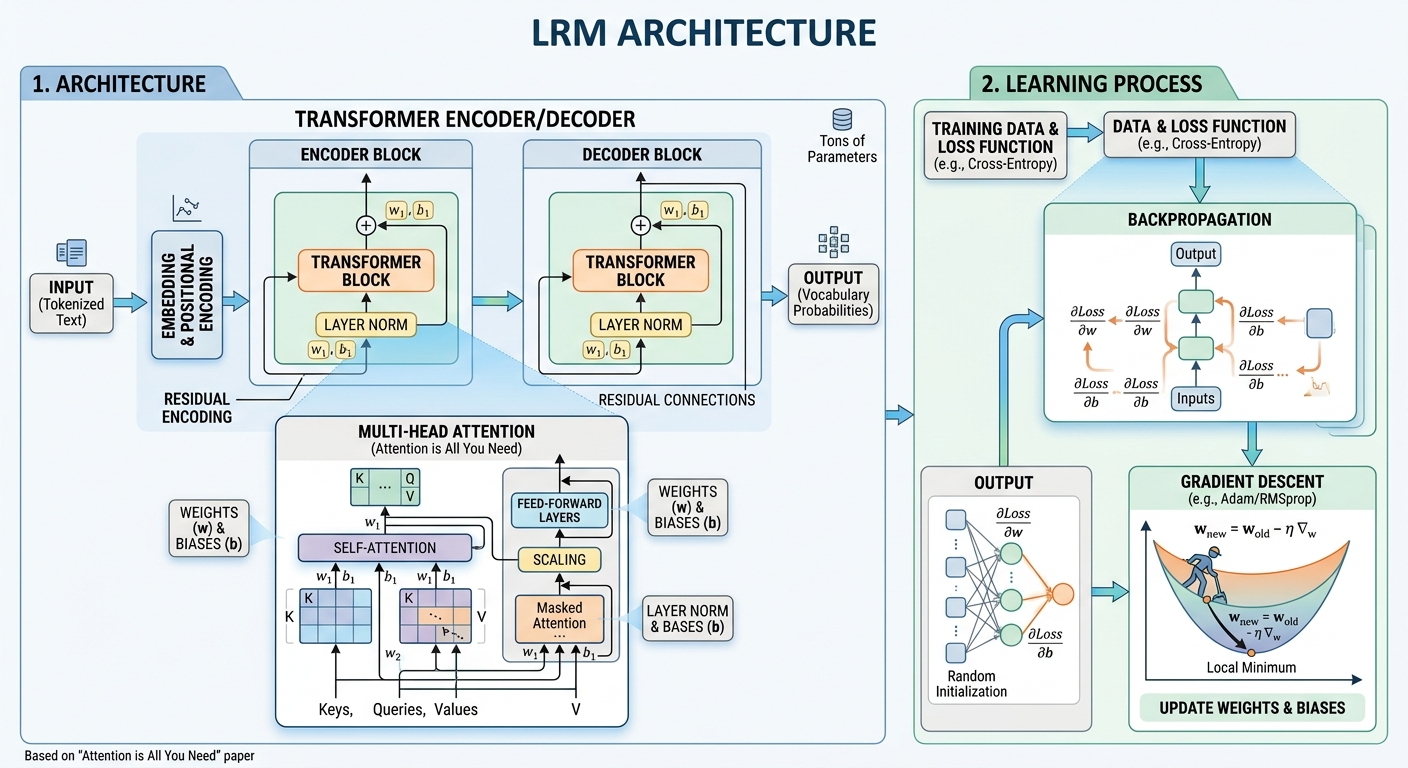
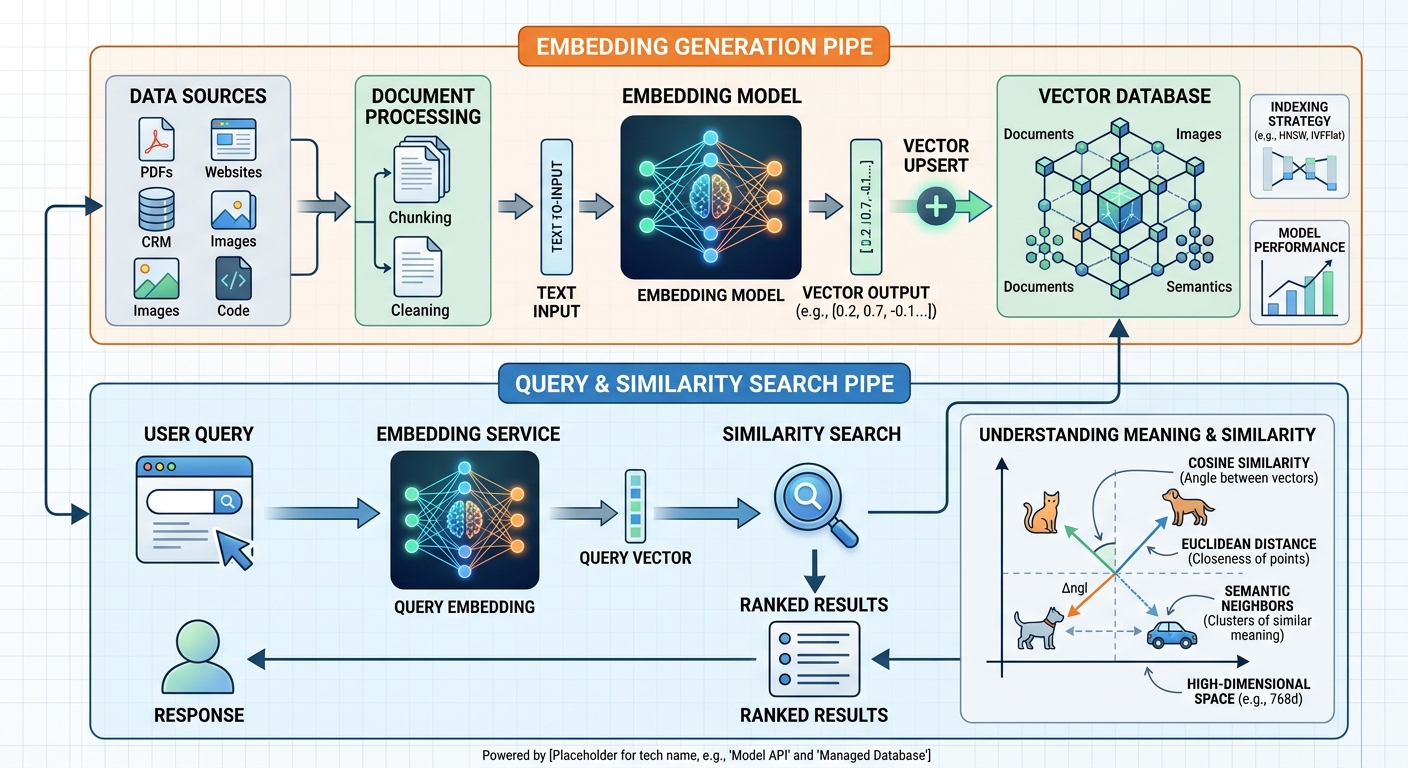
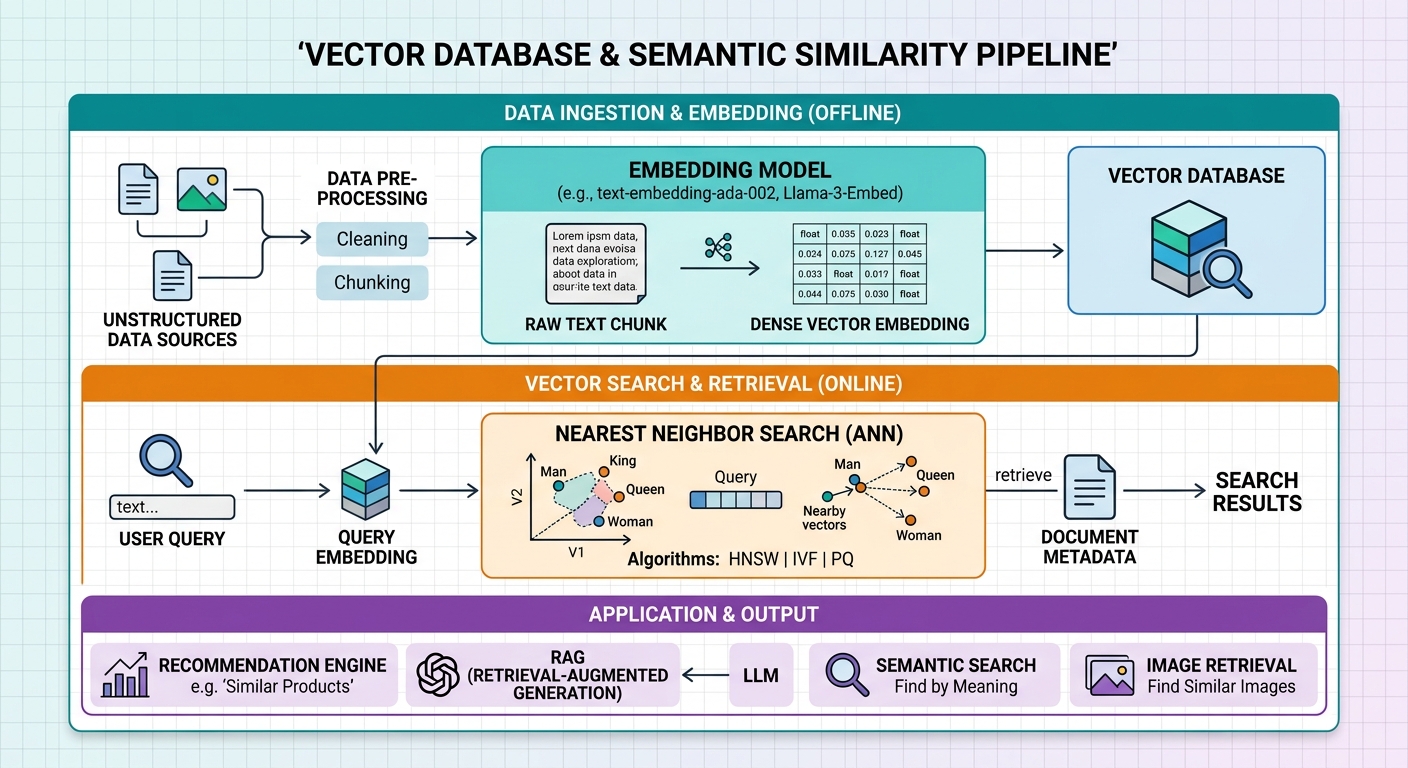
S - Structural Embeddings This covers neural networks and the mathematical foundations of LLMs. It explains how raw text is converted into high-dimensional vector spaces, how attention mechanisms calculate token relationships, and how deep learning architectures form semantic memory.

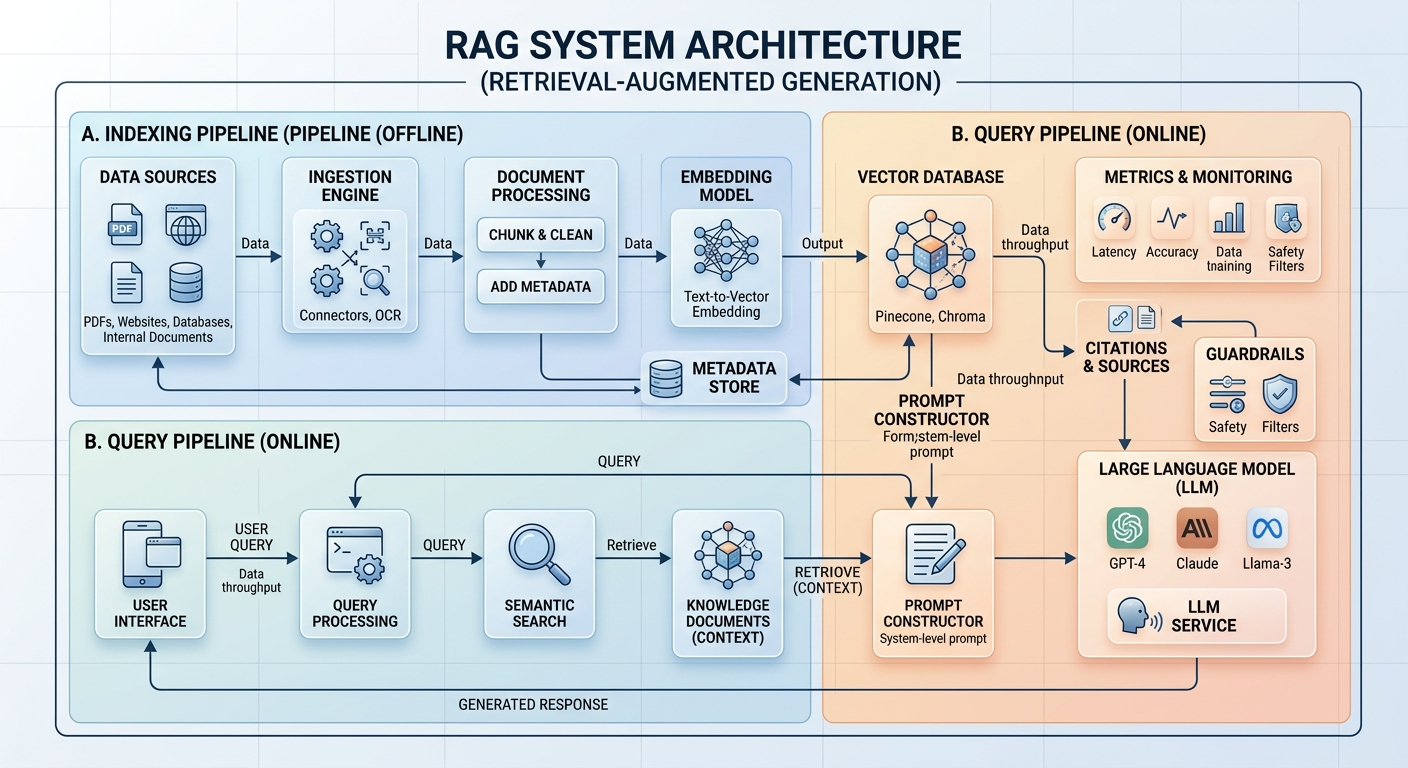
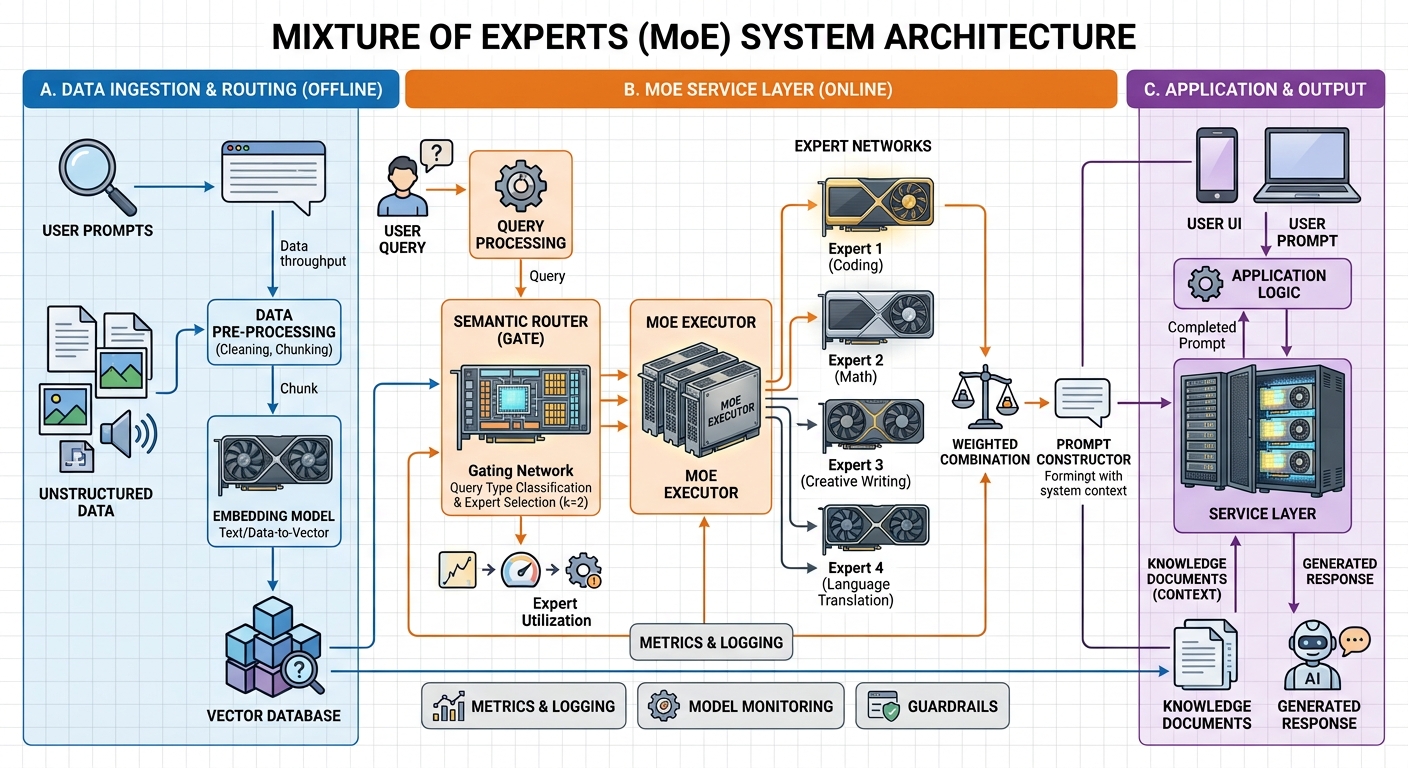
E - Expanded Retrieval This maps directly to RAG (Retrieval-Augmented Generation). It addresses the limitations of static LLM weights by connecting models to real-time external knowledge bases, managing long-context windows, and optimizing vector databases to eliminate hallucinations.

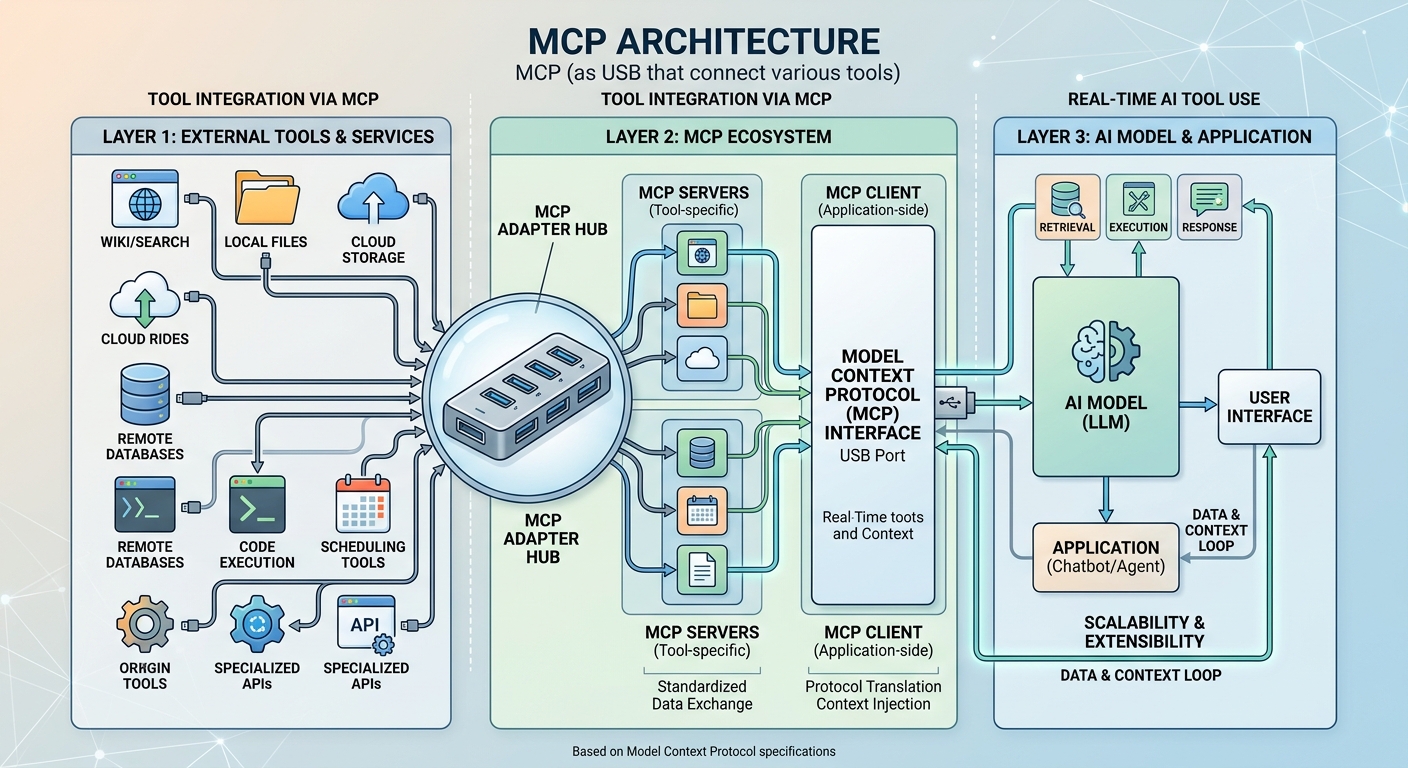
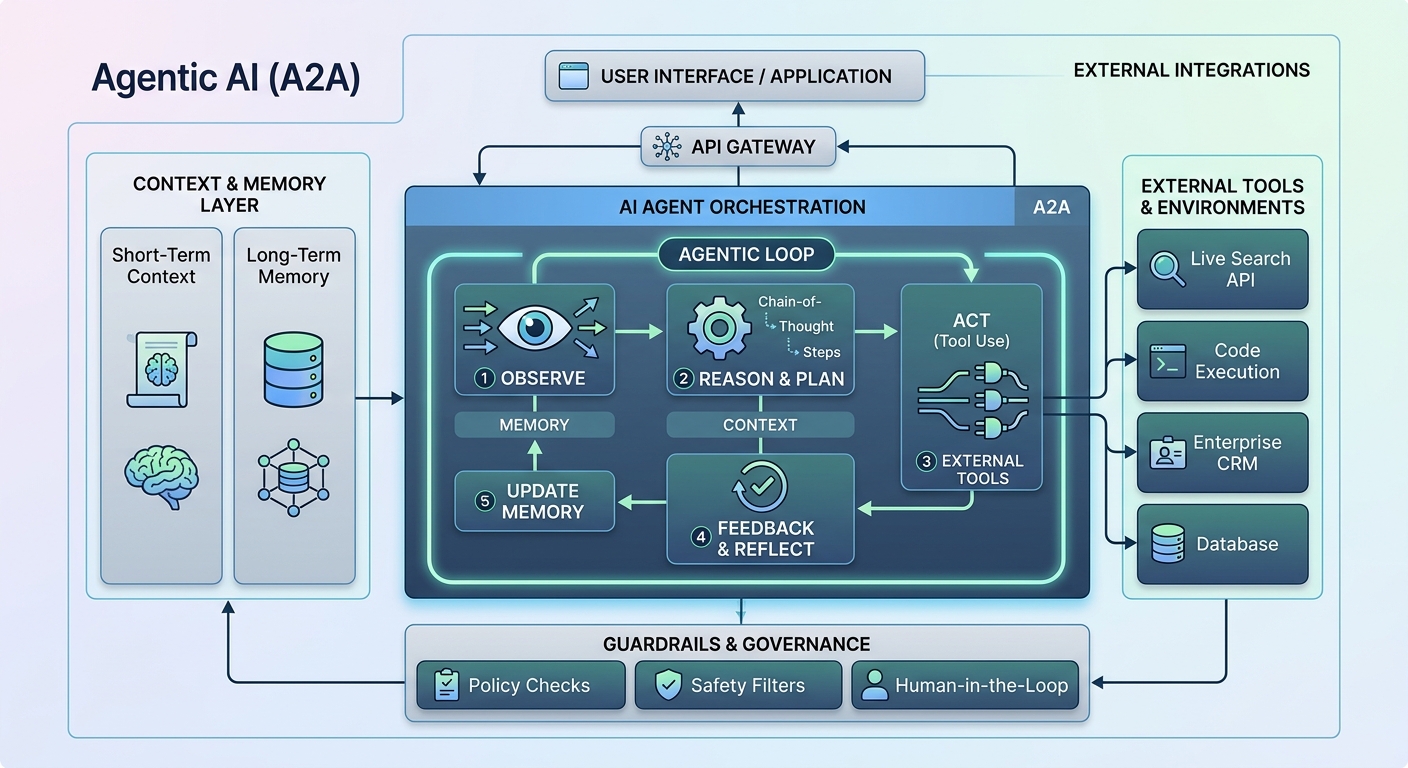
A - Agentic Execution This defines agentic AI. It moves beyond passive text generation into autonomous action loops (like the ReAct framework). This section covers how models reason, break down complex prompts, self-correct, and autonomously decide when to call external functions.

S - Scalable Deployment This tackles core API concepts and infrastructure. It details the engineering required to move AI from a playground notebook to production: API gateways, model orchestration, rate limiting, token caching, and managing multi-agent microservices.

Seven SEAS architecture overview

Foundation

Model semantics and structural embeddings establish a stable reasoning substrate.

Grounding

Retrieval orchestration injects factual, current, and policy-compliant enterprise context.

Autonomy

Agentic planning loops coordinate deterministic tools under safety and observability boundaries.


To build resilient, enterprise-grade agents today, your architecture must master these 7 key technical pillars:

  • 1. Robust State Management and Memory Hierarchies - Modern agents require tiered memory architecture that mirrors human cognition: short-term working memory, episodic memory, and semantic memory.
  • 2. Deterministic Tool-Use and Function Calling Interfaces - Enterprise reliability depends on strict schemas that bridge probabilistic model output with deterministic API execution.
  • 3. Execution Loops, Planning, and Self-Correction - True agents plan, execute, evaluate outcomes, and adapt strategies when intermediate steps fail.
  • 4. Semantic Grounding and Context Expansion (RAG) - Production systems must retrieve factual, context-specific data in real time to reduce hallucinations.
  • 5. Multi-Agent Collaboration and Role Specialization - Complex systems perform best when specialized agents collaborate through structured delegation.
  • 6. Guardrails, Safety, and Policy Enforcement - Autonomous systems require robust security and policy boundaries before any sensitive action is executed.
  • 7. Observability, Tracing, and Evaluation - Because agent execution is non-deterministic, deep tracing and eval-driven development are mandatory.

[ DATA INPUT ] -> Structural Embeddings -> Expanded Retrieval -> Agentic Execution -> Scalable Deployment -> [ PRODUCTION AI ]

Download PDF version »

Architecture Storyline

Each pillar compounds the next, creating an end-to-end enterprise AI operating model.

  1. 1
    State & Memory

    Modern agents require tiered memory architecture that mirrors human cognition: short-term working memory, episodic memory, and semantic memory.

  2. 2
    Tool Calls

    Enterprise reliability depends on strict schemas that bridge probabilistic model output with deterministic API execution.

  3. 3
    Execution Loop

    True agents plan, execute, evaluate outcomes, and adapt strategies when intermediate steps fail.

  4. 4
    RAG Grounding

    Production systems must retrieve factual, context-specific data in real time to reduce hallucinations.

  5. 5
    Multi-Agent

    Complex systems perform best when specialized agents collaborate through structured delegation.

  6. 6
    Guardrails

    Autonomous systems require robust security and policy boundaries before any sensitive action is executed.

  7. 7
    Observability

    Because agent execution is non-deterministic, deep tracing and eval-driven development are mandatory.

State Intelligence

Memory layers that persist intent across every agent step.

Persistent state transforms short interactions into long-horizon execution with continuity, context, and explainability.

  • Session continuity
  • Cross-step recall
  • Policy-scoped memory
Read State & Memory

Execution Discipline

Plan, act, evaluate, and self-correct with deterministic rigor.

Agent loops become production-safe when orchestration, retries, and objective checks are explicit and traceable.

  • Deterministic orchestration
  • Adaptive replanning
  • Failure-aware loops
Read Execution Loop

Operational Trust

Guardrails and observability keep autonomy safe at enterprise scale.

Safety controls and telemetry provide the confidence to move autonomous systems from pilot to critical operations.

  • Policy enforcement
  • Runtime defenses
  • Continuous evaluation
Read Guardrails

Contact Info

E-mail: shiva.dhanuskodi@mesonsoft.com

To learn more about us. Please visit www.shiva-dhanuskodi.us or www.mesonsoft.com

Updates